The Calendar Fallacy

Gritus
Author
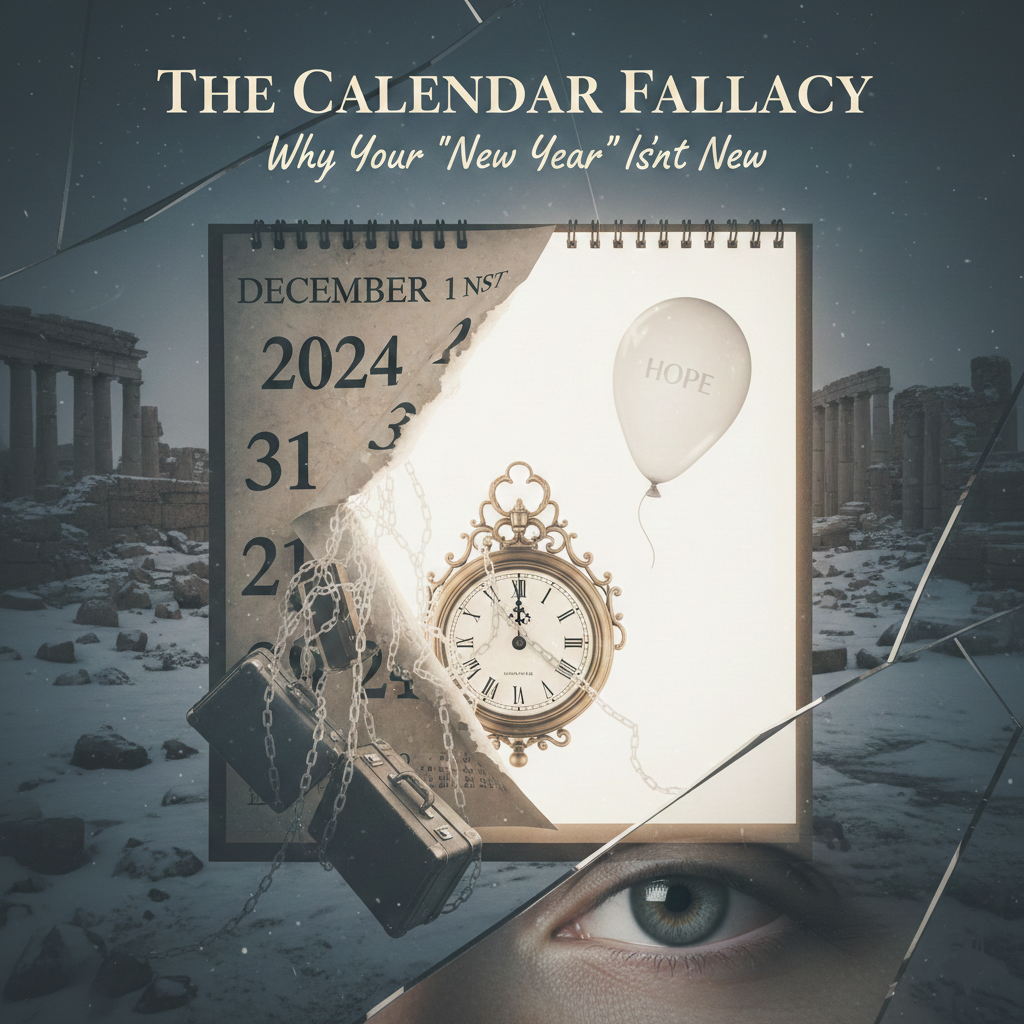
There is a peculiar thing we do every January 1st. We don't just change the date; we attempt a psychological heist. We try to steal a "new self" from the future without paying for it in the present.
The logic of the New Year is built on a glitch in how humans perceive time. We treat the calendar like a physical boundary—as if crossing from December 31st to January 1st is like crossing a border into a country where our old problems don't have jurisdiction.
But if you look at it clearly, the "New Year" is an arbitrary social fiction. The sun doesn't know it’s January. The cells in your body don't feel "newer" today than they did on Tuesday. Only the mind insists on this division.
And that insistence is exactly where we go wrong.
The Hope Sedative
We usually frame "hope" as a virtue. On New Year’s Day, hope is the primary currency. We wish each other well, we set resolutions, and we feel a surge of optimism.
But there is a hidden cost to hope. Hope is often a movement of the mind away from the "what is" toward an illusory "what should be."
When you say, "I hope 2026 is the year I get fit," what you are often actually saying is, "I am unwilling to face the reality of my body today, so I will comfort myself with a fantasy of my body in June." In this sense, hope acts as a sedative. It numbs the friction of our current reality. By projecting a better version of ourselves into a future month, we relieve the pressure to change right now. This is why most resolutions don't just "fail"—they evaporate. They weren't plans; they were exits. They were ways to escape the discomfort of the present moment.
The Carry-Over
The fundamental problem with the "Clean Slate" theory is the occupant of the slate.
If you move to a new city but bring your old habits, your old fears, and your old ways of reacting to stress, the city isn't actually new. It’s just the old life with different scenery.
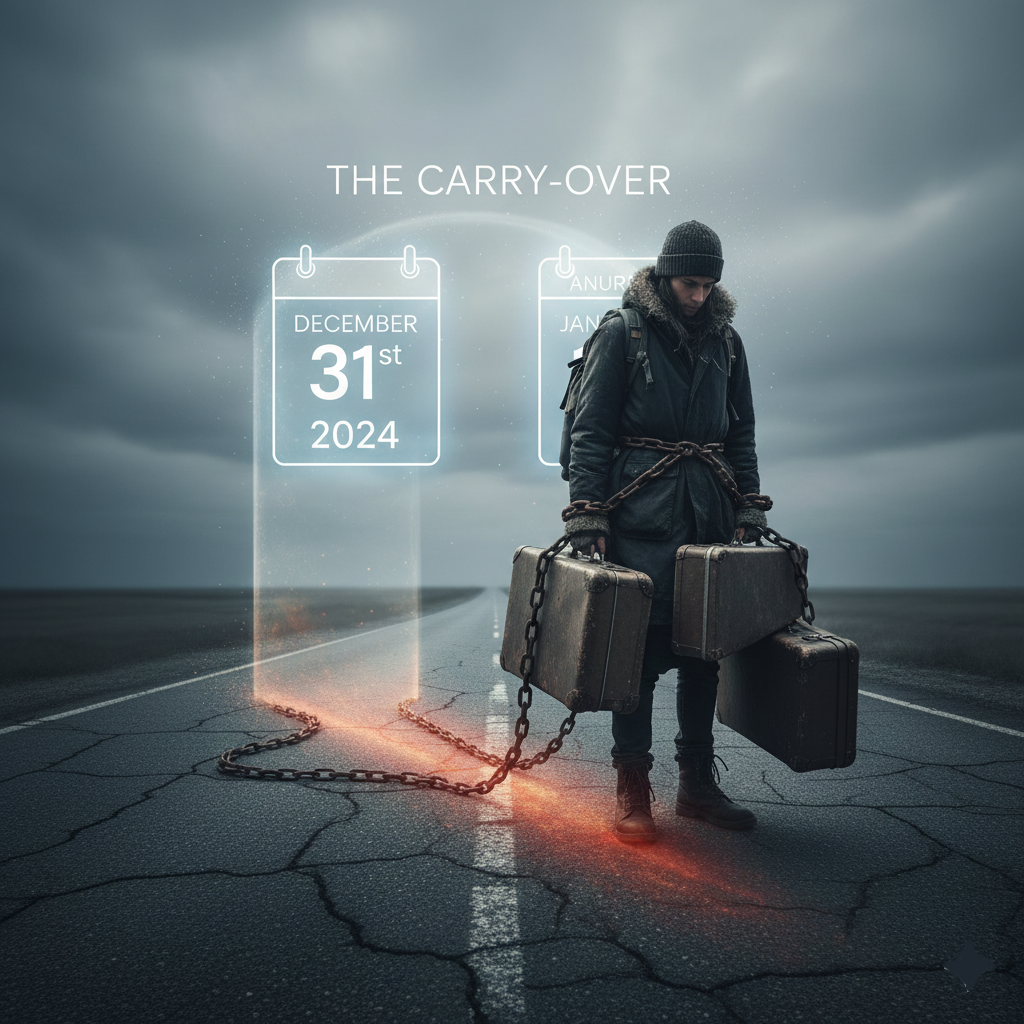
The same applies to the year. If your mind is still functioning on the same software—the same triggers that make you angry in Delhi traffic, the same need for external validation, the same habit of procrastinating on difficult tasks—then 12:01 AM changed nothing. You are simply the same traveler standing in a new station, still clutching the same heavy suitcases.
Time has no power to transform a human being. It only provides a sequence for things to happen. If you want to change the quality of your life, you aren't looking for a new year; you are looking for a new way of seeing.
The Real New Year
If we drop the arbitrary celebration of the calendar, we find a much more interesting truth: The only real "New Year" is the moment you stop carrying the past.
True "newness" doesn't happen once every 365 days. It happens whenever the mind is able to observe a habit without the weight of memory or the distraction of hope.
If you realize a certain way of thinking is making you miserable, and you see it so clearly that the habit drops away, that is a reset. It doesn't matter if it happens on January 1st or a rainy Wednesday in August. That moment is the only "shubh muhurat" (auspicious time) that actually exists.
The most productive way to spend today isn't to make a list of things you want to become in 2026. It’s to look at what you are already carrying from 2025 and ask why you haven't put it down yet.
A year is just a lap around a star. But a moment of clear observation? That’s an actual beginning.