
The Architecture of Insight: From the Smallest Atom to the Silent Mind

Gritus
Author
Most of us live in a world divided into two "truths": the scientific facts we see in textbooks and the messy, confusing reality of our own minds. We are taught that science is objective and "out there," while our inner lives are subjective and "in here."
But if you trace the history of human intelligence, you find a single, powerful flame at the center of both: Natural Inquiry. Whether we are looking at a drop of water or a fleeting emotion, the process of finding the truth is remarkably the same.
1. The Mother of Science
Before there was Physics, Chemistry, or Biology, there was Natural Philosophy.
For centuries, "Science" didn't exist as a separate department. It was simply the branch of philosophy that used reason and logic to understand the physical world. Men like Isaac Newton and Johannes Kepler didn't call themselves scientists; they were Natural Philosophers.
Philosophy is the "Mother" because it provides the structure of inquiry. Science is the "Child" that specializes in the measurable. When we look at the stars, we call it Astronomy. When we look at the mind, we call it Philosophy. But the process of looking is identical.
2. Phase 1: The Outward Inquiry – Finding the Indivisible
To understand how an inquiry builds, let’s look at the Atom.
Around 400 BCE, a man named Democritus didn’t have a laboratory. He had a carrot. He performed a "thought experiment": If I keep cutting this carrot in half, and then half again, eventually I must reach a piece so small that it is uncuttable. He called this the atomos.
For 2,000 years, this was "Philosophy" - —a logical deduction. Then, in the 1800s, John Dalton looked at the same question but changed the tool. He measured the pressure of gases and the weights of chemical reactions. He didn't just think the atom was there; he saw the evidence of its behavior.
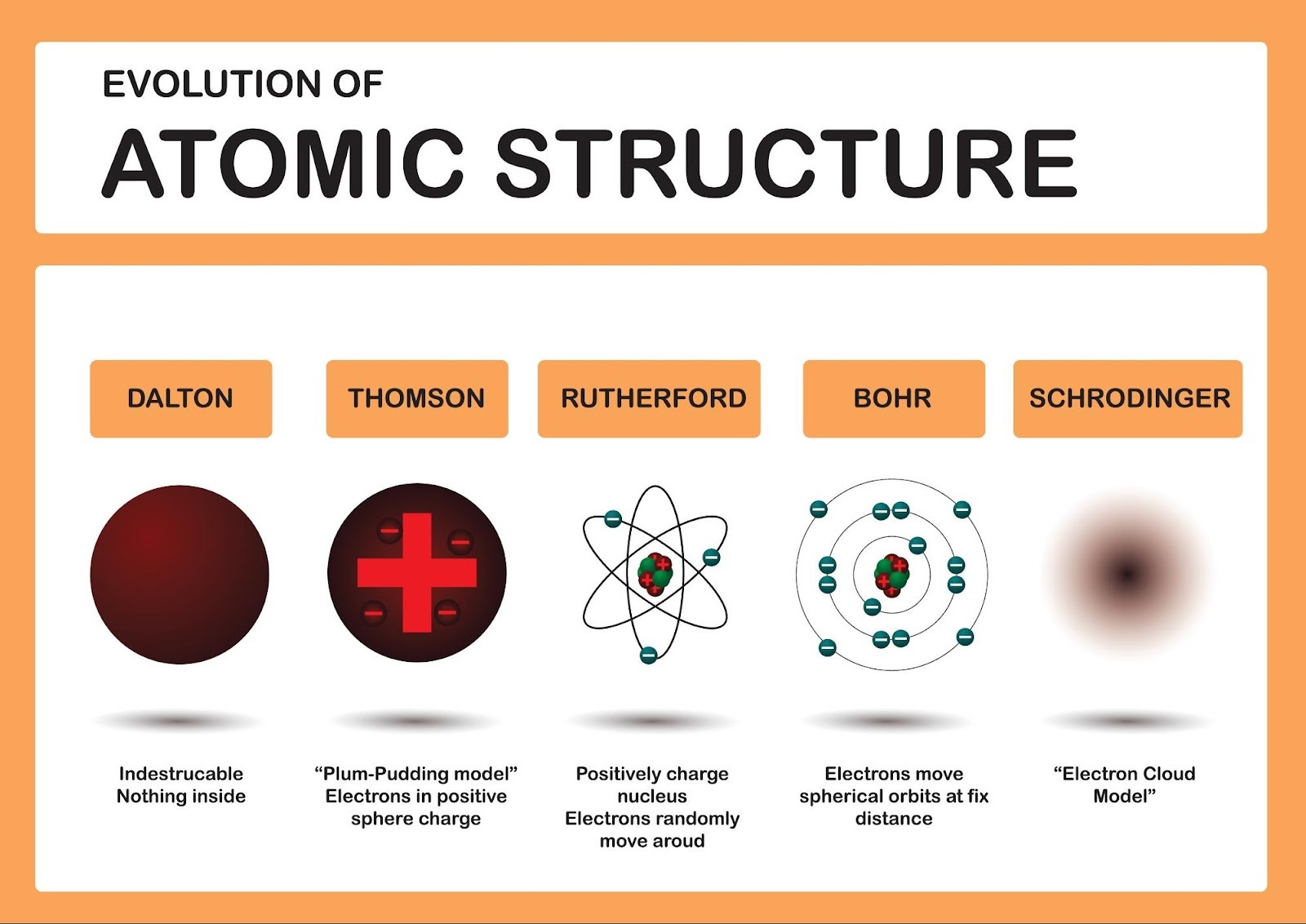
The Structure of this Inquiry:
- Observation: Things are made of parts.
- The Question: Is there a part that cannot be divided?
- The Evidence: Logic (Democritus) followed by Measurement (Dalton).
- The Truth: The Atom exists.
When an inquiry deals with things we can touch, weigh, or see, the "Insight" eventually hardens into something we call Scientific Law.
3. Phase 2: The Inward Inquiry – Measuring the Thinker
Now, we apply this exact same structure to the internal world. When the inquiry deals with things like Thought, we cannot use a ruler. We use Awareness as the instrument.
Let’s perform a "Scientific Inquiry" into the nature of your own mind.
Step 1: The Observation
Sit quietly and watch a thought arise. You will notice that every thought is wrapped in language you already know, or an image you have already seen. If you think of a "future" vacation, you are actually piecing together memories of past beaches, past colors, and past desires.
Step 2: The Question
Ask yourself: Can I have a thought about something I have absolutely no memory of? Can I think of anthink an "original" thought that is not a reaction to something that has already happened?
Step 3: The Logical Deduction
Through rigorous looking, you begin to see the mechanical chain:
- Experience: Something happens to you (you see a fire).
- Knowledge: That experience is stored as data (fire is hot/dangerous).
- Memory: The data becomes a permanent record.
- Thought: When you see a flame again, "Thought" is the response of that memory.
Therefore, Thought is always a movement of the "old." It is a chemical and electrical reaction of the past. It can never be "new," "fresh," or "original" in the absolute sense; it is simply a rearrangement of old data.
Step 4: The Insight
Since thought is always "old" and limited by my past, it cannot perceive something truly fresh or "truthful" in the moment.
This Insight is not a "fact" you memorize like a science formula. It is a shift in how you see your own mind. Just as Newton realized the Earth and Moon are linked by the same gravity, you realize that your "Thinker" and your "Memory" are the same thing.
4. The Wall of Knowledge
If you are a scientist trying to solve a truly "new" problem, you use the past (data) as far as it can go. But eventually, you hit a wall. To find the breakthrough - —the truly "creative" solution - —the machine of thought must stop looping.
This is why "Aha!" moments happen in the silence of a walk or the quiet of a shower.
- Creativity is not the work of thought; it is what happens when the "old" machine (the past) stops long enough for the "new" to enter.
- Truth is not a description in a book; it is the direct perception of "What Is" without the interference of your labels and biases.
5. The Highest Form of Intelligence
We have been conditioned to believe that a "smart" person is one who has a lot of knowledge (the past) and can manipulate it quickly (thought).
But there is a higher intelligence. It is the capacity to observe the movement of your own thoughts with the same objectivity that a scientist observes a chemical reaction.
The highest form of intelligence is a Clear Mind. A mind that:
- Uses thought for practical tasks (measurable science).
- Recognizes that thought is useless for perceiving Truth or Creativity.
- Can remain in a state of Silent Awareness, where the "machine" is still.
When the mind is silent, it is no longer a slave to its own past. It is finally capable of seeing the world as it actually is, not as it was. This is the ultimate goal of all inquiry, whether it starts with a carrot in Ancient Greece or in the silence of your own room today.The scientist observes the atom and finds the law of the universe. The self-observer observes the thought and finds the law of the self. Both are looking for Clarity. When we stop labeling the world and start observing the way we see, we discover that the most "scientific" thing we can do is to be silent. In that silence, we aren't just thinking about life - we are finally participating in it.